
24/7 Support
- Assistance with Daily Living
- Social and Community Access
- Transportation
- Respite / STA
- Home and Household Help


As support workers, connecting with every client is your primary goal. This can present unique opportunities when assisting individuals who are non-verbal. Supporting those with limited or no speech, including many with autism spectrum disorder, opens up new worlds of connection and understanding. This guide will provide you with practical strategies and insights into nonverbal communication, helping you build stronger relationships and empower the people you support to express themselves fully and live with greater independence.
When verbal communication isn’t an option, a rich world of nonverbal communication takes its place. Individuals who are non-verbal use a variety of methods to express their needs, thoughts, and feelings. For support workers, the key is learning to recognize and respond to these unique signals.
Understanding these nonverbal cues is the first step toward building a bridge of communication. By paying close attention to body language and other signals, you can ensure your clients feel heard, respected, and understood, which is vital for their overall mental health and well-being.
A person may be non-verbal for many reasons. Conditions such as autism spectrum disorder (ASD), cerebral palsy, and Down syndrome can affect a person’s ability to use speech. Acquired conditions, like traumatic brain injuries or progressive neurological disorders, can also lead to a loss of verbal abilities. Developmental delays are another common cause.
One of the primary challenges for support workers is that each individual’s methods of communication are unique. Overcoming this requires patience and a commitment to learning the specific cues of each client. It means moving beyond a one-size-fits-all approach and personalizing your support.
The goal is to understand the different ways your client communicates. By observing and learning their personal communication style, you can avoid misunderstandings and ensure they can effectively express their needs, participate in social settings, and advocate for their rights. This builds a foundation of trust and respect.
Communication is much more than just words. Non-verbal clients often have highly expressive ways of conveying their feelings and intentions. Facial expressions, for example, can communicate a wide range of emotions, from happiness and sadness to surprise and anger, often universally understood across cultures.
Body language is another powerful tool. The way a person sits, stands, or moves can communicate a wealth of information. Pay attention to their posture and subtle movements. Hand gestures are also a key part of the communication fabric, used to wave, point, or add emphasis. Even the amount of eye contact can indicate interest, affection, or hostility.
Recognizing these nonverbal signals is one of the best strategies for supporting clients. Each person’s collection of gestures, expressions, and vocalizations forms their unique language. Learning these forms of nonverbal communication allows you to build stronger, more meaningful connections and provide better support.
When verbal communication isn’t an option, a rich world of nonverbal communication takes its place. Individuals who are non-verbal use a variety of methods to express their needs, thoughts, and feelings. For support workers, the key is learning to recognize and respond to these unique signals.
Understanding these nonverbal cues is the first step toward building a bridge of communication. By paying close attention to body language and other signals, you can ensure your clients feel heard, respected, and understood, which is vital for their overall mental health and well-being.
A person may be non-verbal for many reasons. Conditions such as autism spectrum disorder (ASD), cerebral palsy, and Down syndrome can affect a person’s ability to use speech. Acquired conditions, like traumatic brain injuries or progressive neurological disorders, can also lead to a loss of verbal abilities. Developmental delays are another common cause.
One of the primary challenges for support workers is that each individual’s methods of communication are unique. Overcoming this requires patience and a commitment to learning the specific cues of each client. It means moving beyond a one-size-fits-all approach and personalizing your support.
The goal is to understand the different ways your client communicates. By observing and learning their personal communication style, you can avoid misunderstandings and ensure they can effectively express their needs, participate in social settings, and advocate for their rights. This builds a foundation of trust and respect.
Communication is much more than just words. Non-verbal clients often have highly expressive ways of conveying their feelings and intentions. Facial expressions, for example, can communicate a wide range of emotions, from happiness and sadness to surprise and anger, often universally understood across cultures.
Body language is another powerful tool. The way a person sits, stands, or moves can communicate a wealth of information. Pay attention to their posture and subtle movements. Hand gestures are also a key part of the communication fabric, used to wave, point, or add emphasis. Even the amount of eye contact can indicate interest, affection, or hostility.
Recognizing these nonverbal signals is one of the best strategies for supporting clients. Each person’s collection of gestures, expressions, and vocalizations forms their unique language. Learning these forms of nonverbal communication allows you to build stronger, more meaningful connections and provide better support.

For any relationship to thrive, trust is the cornerstone, and this is especially true for support workers assisting non-verbal clients. Establishing rapport requires empathy and patience. It’s about showing you are present and willing to listen, even when words aren’t used.
Creating a foundation of trust is essential for effective communication. When your clients feel safe and respected, they are more likely to engage and express themselves. Your consistent, respectful approach will show them that you care and are there to support them.
Effective pairing is the process of building a positive relationship with your client. This initial bonding period is crucial for establishing long-term trust and cooperation. It involves showing genuine interest in what your client enjoys and participating in those activities with them without placing demands.
Improving your communication skills during this phase is vital. The goal is to become a source of positive reinforcement. You can achieve this by being consistently patient and respectful. Here are a few tips to help with pairing and bonding:
By focusing on building a strong, positive connection first, you create a relationship founded on trust and clarity. This makes future interactions more successful and less stressful for both you and your client.
A key part of building trust is creating a safe environment where your client feels secure and comfortable. This involves both the physical space and the emotional atmosphere you cultivate. A predictable and organized space can reduce anxiety and make communication easier.
Your approach should always be rooted in compassion and understanding. Pay attention to signs of discomfort or stress and be ready to adapt. If something isn’t working, try a different approach. The right support means being flexible and responsive to your client’s needs in the moment.
Ultimately, a supportive environment is one where your client knows they will be treated with dignity and respect. When they feel safe to be themselves without judgment, they are more likely to open up and communicate, strengthening the bond of trust between you.
Effective support for non-verbal clients is built on a foundation of practical and empathetic communication strategies. As support workers, enhancing your nonverbal communication skills is just as important as any other tool you use. It begins with a commitment to careful observation and a willingness to learn.
By tuning into your client’s body language and other signals, you can understand their needs more deeply. This proactive approach helps prevent frustration and ensures that every interaction is a positive one. Below, we’ll explore specific strategies to help you interpret cues and empower your clients.
One of the most powerful strategies is to become a skilled observer. Each individual has a unique set of nonverbal cues they use to communicate. Careful observation allows you to learn this personalized language and understand what your client is trying to express.
Look beyond single gestures and consider all the nonverbal signals as a group. Pay attention to their body language, posture, facial expressions, and eye movements. Are their shoulders tense or relaxed? Are they making eye contact or avoiding it? These signals provide important information about their emotional state and intentions.
Remember that a single gesture can be misinterpreted, so always look for patterns. Trust your instincts; if you sense something isn’t right, you may be picking up on a mismatch between different nonverbal signals. Consistent observation is key to accurately interpreting your client’s nonverbal communication.
Empowering clients with choice and autonomy is a cornerstone of respectful support. Allowing individuals to make their own decisions, no matter how small, fosters independence and self-worth. This is a vital strategy for all support workers.
You can offer choices in simple, clear ways. Instead of assuming what a client wants, present them with options. This can be done using objects, pictures, or gestures. For example:
Involving a family member to understand preferred choices can also be helpful. By consistently offering choice, you reinforce that your client’s preferences matter. This small shift in communication can have a huge impact on their confidence and willingness to engage.
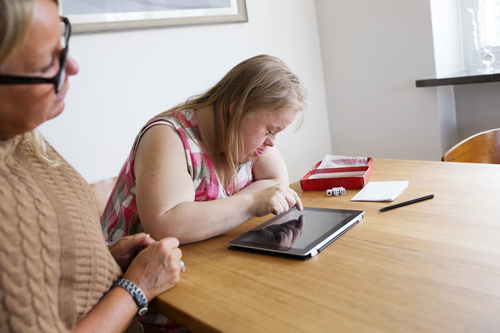
Beyond personal interaction, a wide array of communication tools and technologies can dramatically enhance a non-verbal client’s ability to communicate. These assistive devices range from simple, low-tech options to sophisticated, high-tech systems, opening up new ways to express thoughts and needs.
Choosing the right communication aids is crucial for improving communication skills. These tools, which often use visual symbols, should be tailored to the individual’s physical abilities and cognitive level. Let’s look at some of the most effective options available.
A variety of effective communication aids are available to support non-verbal individuals. These tools are often categorized as either low-tech or high-tech Augmentative and Alternative Communication (AAC). The best choice depends on the user’s specific needs, abilities, and preferences.
Low-tech options are simple and don’t require electronics. These include communication boards with pictures or symbols, books with common phrases, and picture cards (like the PECS system). These assistive devices are excellent for making choices and expressing basic needs. High-tech tools offer more advanced communication skills, such as speech-generating devices and specialized tablet apps.
Selecting the right communication tools is a collaborative process, often involving a speech pathologist. Here is a breakdown of common options:
Tool Category | Examples |
Low-Tech AAC | Communication boards/books, picture cards, choice-making symbols |
High-Tech AAC | Speech-generating devices (SGDs), tablet apps, eye-gaze technology |
The National Disability Insurance Scheme (NDIS) is a critical resource for accessing communication supports. As a support worker, understanding how to help clients leverage NDIS funding can make a significant difference. The scheme can fund therapies, communication aids, and training for clients, families, and support staff.
To access these supports, communication goals must be clearly listed in the client’s NDIS plan. This often requires assessments from professionals like speech pathologists, who can recommend specific assistive technologies or therapies. For clients with ASD or other conditions, this funding is essential for obtaining the right tools.
You can help by ensuring that recent assessments are available and by encouraging clients and their families to speak directly with their NDIS planner about funding for communication. Advocating for these resources helps ensure your client has every opportunity to develop their communication skills and participate more fully in their community.
Supporting non-verbal clients requires patience, understanding, and the right strategies. By employing core techniques such as keen observation of non-verbal cues and creating an environment that fosters trust, support workers can significantly enhance the communication experience for their clients. Additionally, utilizing tools and technologies can bridge the gap and empower clients to express themselves more effectively. Remember, each interaction is an opportunity to strengthen your bond with your client, making them feel valued and understood. If you have questions or would like to discuss further strategies, get in touch!
Support workers benefit from training focused on nonverbal communication, including interpreting body language and facial expressions. Specialized courses on conditions like autism spectrum disorder, using AAC devices, and strategies for managing challenging behaviors are also valuable for improving communication skills and supporting clients’ mental health.
A primary challenge is understanding the different ways each client communicates, as their nonverbal cues can be unique. It can be a difficult time when a client is frustrated and unable to express themselves. Misinterpreting signals can also create misunderstandings, highlighting the importance of patience and collaboration with a family member.
Yes, numerous online communities and professional networks exist for support workers. Platforms like Facebook and LinkedIn host groups where you can share resources, ask for advice, and connect with peers. These networks are excellent for finding new communication strategies and gaining support from others in the field.
Applied Behaviour Analysis (ABA) supports non-verbal clients by teaching them practical ways to communicate through pictures, gestures, signs, or devices. It reduces frustration and challenging behaviours by replacing them with positive communication methods and builds independence through step-by-step learning of daily and social skills. Families and support workers are also involved to ensure consistent support across environments.
Copyright © 2026 Assist Support Services | All Rights Reserved | Website proudly designed by Sassy Marketing and Communications